



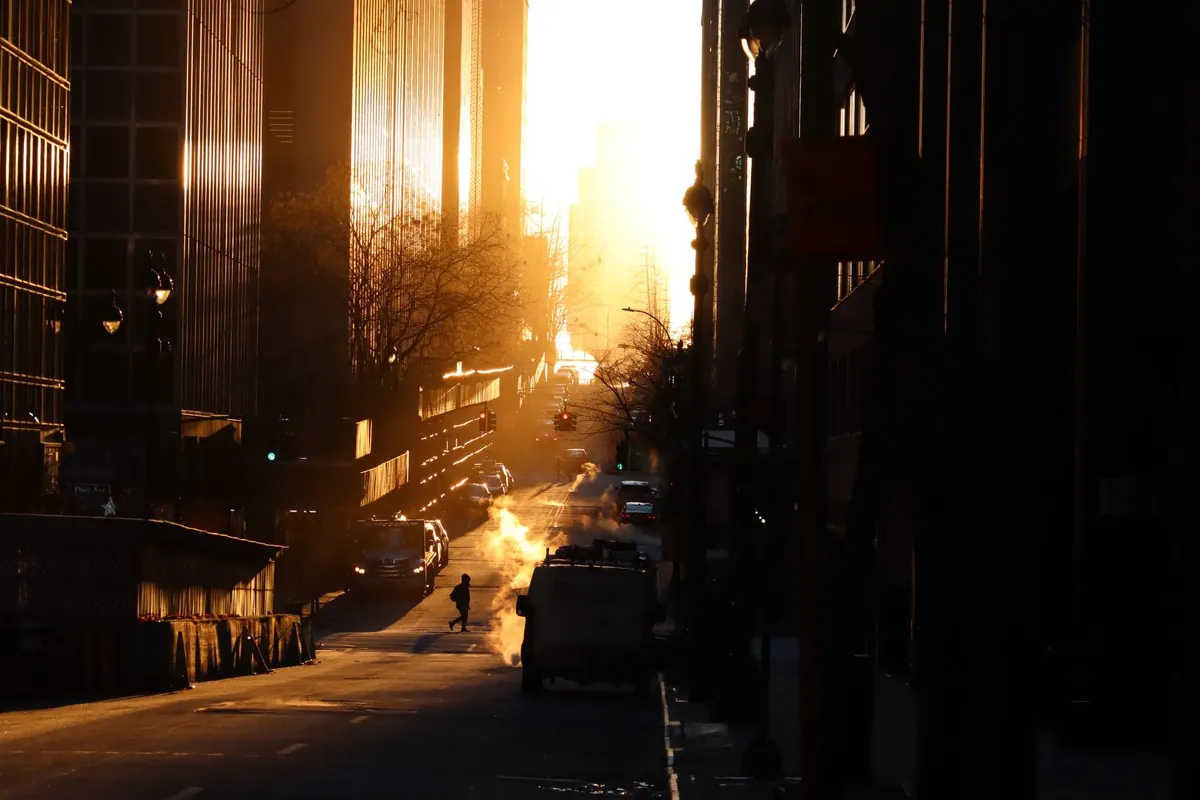
At seven in the morning the square already smells of warm stone. By noon the benches are empty, the playground has become a hot plate, and the man who sells fruit from his van has moved the crates into the last strip of shade. A city in a heat wave is not simply a city with a higher temperature reading. It is a city running on a different timetable — earlier errands, later walks, closed shutters at two in the afternoon, and a long, slow evening that only begins when the pavement stops radiating.
Most of that adjustment happens privately, household by household. But behind it sits a public machine that residents rarely see: an emergency plan, a list of names, a coordination room, a budget. And a set of costs that stay on the books long after the temperature drops.
The plan that sleeps in a drawer until June
Nearly every mid-sized and large municipality in southern Europe now has a heat emergency plan. Many were written after a bad summer, revised in the quieter months, and activated when forecasters predict several consecutive days above a local threshold. In Italy, the health ministry's summer bulletins and the civil protection system feed into that trigger mechanism, and city departments use them much as they use flood warnings: as a signal to move from routine to something more urgent.
A working plan tends to include a handful of concrete moves. A coordination point where social services, civil protection volunteers, public health and the local police can talk to each other. Extended hours at libraries, swimming pools and air-conditioned public buildings. Drinking water points. Telephone check-ins with registered vulnerable residents. Suspension of certain street works and, in some regions, ordinances restricting outdoor labour during the hottest hours. Extra street cleaning, because heat and waste are a poor combination.
The difference between a good plan and a decorative one is rarely the document. It is whether anyone has updated the phone numbers inside it.
Heat is not equally distributed
The same thermometer reads differently in different flats. A top-floor apartment under a dark roof, without shutters or air conditioning, can be several degrees hotter than a ground-floor home on the same street. An older woman living alone on that top floor is not an abstraction in a plan; she is the person the plan exists for.
The risk list is fairly well understood by those who work in the field: older people, particularly those living alone or with limited mobility; people with heart, kidney or respiratory conditions; infants and small children; pregnant women; people sleeping rough; outdoor workers in construction, agriculture, delivery and street markets; and people taking medication that affects hydration or the body's ability to regulate temperature.
The list is the hard part
Compiling a register of vulnerable residents sounds straightforward and is not. Lists go stale when people move, change numbers or die. Some residents refuse to be listed. Others are simply unknown to social services because they have never needed them before. The cities that manage this best tend to stop relying on a single database and use the people who already have a reason to knock on a door: pharmacists, family doctors, parish volunteers, condominium administrators, the neighbour who notices when the shutters stay closed.
A note on health: heat advice is general by nature. Anyone with a chronic condition, or a medication schedule that affects hydration, should ask a doctor or pharmacist how to handle a heat wave rather than improvising from a leaflet.
Shade, water and the fight for public space
Cooling a city is partly a question of architecture and partly one of manners. Shade is the most democratic infrastructure there is: it costs nothing to use and requires no booking. Trees deliver it best, but they take years to grow, which is why short-term shade — awnings, pergolas, fabric canopies over bus stops and market stalls — matters as much as long-term planting. A bench under a tree, a fountain that works, a public toilet that stays open: these small things determine whether an older resident can leave the house in July at all.
Water is the other half. Public drinking fountains, the nasoni that Romans treat as civic furniture, are only useful if they are maintained and if people know where they are. The same goes for the indoor refuges — libraries, museums, churches, shopping centres — that many cities now map and publish. A cool room two bus rides away is not a refuge for someone who cannot comfortably take two bus rides.
What a heat wave actually costs a city
Extreme heat produces costs that scatter across departments and therefore rarely appear anywhere as a single figure. A city that wanted to know its own "heat bill" would have to collect at least the following:
- Staff overtime and shift changes for social services, civil protection volunteers and street cleaning.
- Energy bills for cooling public buildings, including those kept open longer as refuges.
- Water for parks, tree planting and fountains, plus repairs when aging pipes give way under demand.
- Road and infrastructure damage: asphalt softening, surface buckling, rail speed restrictions and the repairs that follow.
- Emergency accommodation and transport for people who cannot safely stay in their homes.
- Lost revenue from cancelled outdoor events, quiet markets and fewer visitors in the middle hours of the day.
- Replacement planting when young trees die in their first or second summer — a cost paid twice, since the shade never arrives.
There is a budgeting problem underneath this list. Preventive spending is easy to cut in a difficult year and hard to defend afterwards, because the heat wave that did not kill anyone leaves no visible trace. The honest question for a council is not "how much did we spend on heat" but "what did we spend it on, and what would we have spent without it".
The gap between paper and pavement
Plans tend to fail in the last few metres. A registered resident does not answer an unknown number. A leaflet is printed in one language in a neighbourhood where three are spoken. A cooling centre opens on the third floor of a building with a broken lift. A water distribution point is announced on a website that half the target audience never visits.
The fixes are unglamorous: call from recognisable numbers, and call twice; put information where people already go, including pharmacies, bakeries, churches and market stalls; check that the refuge is genuinely reachable; and give front-line staff the authority to make small decisions without a chain of approval. Trust, in a heat wave, is a practical resource. It decides whether a knock on the door is answered.
Cheap measures that usually earn their keep
Not everything requires a capital budget. Measures that tend to repay their cost quickly include:
- Publishing a simple, printable map of cool places with opening hours and whether they are accessible.
- Keeping a small number of air-conditioned public rooms open late, staffed by people who can also offer water and a conversation.
- Coordinating with local pharmacies to check on regular customers during alert periods.
- Watering street trees on a schedule that includes the hottest weeks, not just spring planting.
- Adjusting street cleaning and maintenance shifts to early morning, protecting workers and getting better results.
- Tracking heat-related expenditure across departments so next year's decisions rest on something more than memory.
A short checklist for the coming weeks
Residents have more leverage than they often assume, and most of it is local. Find out whether your municipality publishes a heat plan and a list of cool places; if it does not, ask the social services office where the information is. Note the hours of the nearest library or air-conditioned public space, and check whether the route there is shaded or accessible. Keep water where you will actually see it, and check on the neighbour whose shutters are still closed at eleven in the morning — a short visit does more than most official campaigns.
Report broken fountains and dead street trees; both are cheap to fix early and expensive to fix late. If you work outdoors, know what your employer is required to provide and when work should stop. And if you are managing a health condition, a tight budget for cooling, or an older relative living alone, ask for specific advice from a doctor, a pharmacist or a social worker rather than working it out in August.
Heat waves are seasonal, but the costs they impose are not. They arrive every summer, in the same places, for the same people. That predictability is uncomfortable, and also useful: it means most of the work can be done before the first alert of the year.
Photo: Lexi Orizio / Pexels