



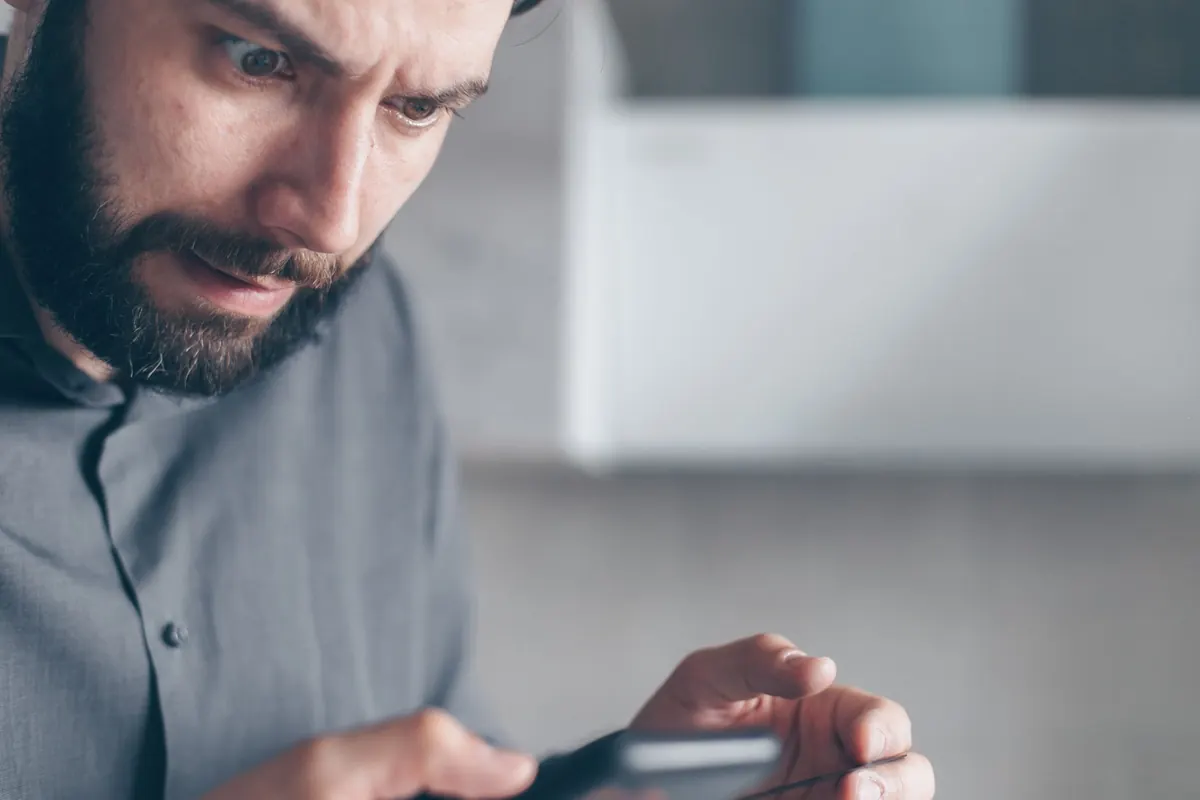
The phone buzzes. A push alert, a screenshot, a clip with no context attached. Within a couple of seconds you already have a feeling about it, and the feeling arrives well before the facts do. That gap — between the alert and your reaction — is where most misinformation does its work. What follows is not a fact-checking seminar. It is ten questions you can ask in about two minutes, most of which take fifteen seconds. If a claim fails two or three of them, close the tab and wait. The story will still be there in half an hour, and it may look quite different.
Breaking is a label, not a proof
Alerts from newsrooms and posts from anonymous accounts now share the same visual grammar: bold type, a red banner, a timestamp, an air of emergency. The word "breaking" describes speed, not accuracy. Good outlets send alerts from partial copy all the time, and they correct them later — often quietly, sometimes in a paragraph nobody reads.
So start by separating three things that get blurred together: what the alert says, what its source claims, and what has actually been confirmed. A screenshot of a headline is not the headline. A video is not proof of where it was filmed. A trending hashtag is not a consensus. Ask yourself plainly: what exactly am I looking at, and who made it?
The ten questions, in the order to ask them
- Who is the account, and how old is it? Read the handle, not just the display name. An extra letter, a doubled underscore, a swapped word — that is usually all it takes to impersonate a real outlet. Check when the account joined and whether it has any posting history before this week. New account, enormous claim, no past: slow down.
- Can you find the original? Screenshots of screenshots are how claims quietly lose their context. Work back to the first post, the first article, the first statement. If the trail dead-ends at an account with no name, no history and no follow-up, you are looking at a rumour wearing a costume.
- Does the alert match the story it links to? Alerts are written in a hurry and updated far less often than articles. Open the link. If the piece does not contain the claim the alert made, either the alert was wrong or the outlet has already walked it back. Both are worth knowing before you repeat it.
- What does the source know, and how would they know it? "Sources say" is not information; it is a promise of information. One anonymous source can be perfectly legitimate — whistleblowers exist — but a solid story tells you what position that person is in and how they came by what they know. When every layer is unnamed, you are reading a rumour with a byline.
- Are the other reports independent? Ten outlets repeating one wire story is one source, not ten. Look instead for newsrooms that would have had to do their own reporting: a local paper close to the event, a specialist publication, an institution publishing on its own site.
- Is there a document, or only a description of one? Filings, decrees, statements and reports can usually be found on the institution's own website. Check there rather than in a screenshot of it. Real documents carry consistent dates, reference numbers and formatting; forgeries usually have one detail that does not quite fit.
- Does the image survive a reverse search? Old footage returns with every new crisis, usually with the date cropped out. Look for signage in the wrong language, number plates from the wrong country, shadows pointing the wrong way, trees in leaf in February. If nobody can say where or when a clip was filmed, treat it as decoration, not evidence.
- Who is disputing it, and what do they actually say? Search for the denial on purpose. If the ministry, the company or the person named has responded, read the full response rather than a summary of it. Confirmation feels like evidence. It is not.
- Do the dates and time zones add up? Claims often claim to be "just now" while the only posts about them are hours old, or the timeline assumes a capital city's clock for an event in another region. Small inconsistencies in time are a reliable sign that a story was assembled rather than reported.
- What is it asking you to do? Outrage, urgency, "share before this gets deleted", a sudden appeal for money. Emotional pressure is the delivery mechanism. If the main payload of a post is a demand for immediate action, that is the moment to slow down, not speed up.
You will rarely need all ten. Most bad items fail at question one, two or five, and the failure is usually visible in under a minute.
The anonymous source problem
It is tempting to treat anonymity as a red flag on its own. That is the wrong test. Serious reporting depends on people who cannot speak on the record, and demanding names would shut down a lot of legitimate journalism. The useful question is not whether a source is anonymous but whether the outlet is accountable for them.
Look for signs of that accountability. Does the story explain why the person is unnamed? Does it tell you what they could plausibly know? Is there a second, independent strand of evidence? Do the journalists have a visible record of corrections? A single anonymous claim, relayed by an account that never corrects anything, is a very different object from a named newsroom staking its reputation on a source it has described in detail.
One more thing: do not go looking for the source yourself. Speculating in public about who an unnamed person might be can put real people in danger, and it is not your job. Judge the reporting, not the human being behind it.
When the alert touches health, money or the law
These are the claims where a wrong share does the most damage: a supposed change to a benefit rule, a new medication warning, a deadline that does not exist. In these cases a screenshot is never enough. Go to the official body, the regulator, the institution or the company's own statement, and read the primary text. If a decision affects your health, your money or your legal position, take advice from a qualified professional rather than from an alert or a group chat.
A thirty-second drill worth keeping
- Keep alerts switched on for one or two outlets you trust, and off for everything else. A muted phone is an underrated verification tool.
- Before sharing, search the key sentence in quotation marks together with the word "false" or "denied". Two seconds, surprisingly effective.
- Save the link, not the screenshot. Screenshots strip out the date, the author and the correction that may come later.
- Wait for the second cycle: initial reports, then revisions. If a claim is wrong, the correction usually surfaces within a few hours.
- When you do pass something on, name what you know and what you don't: "reported, not confirmed" is a complete sentence and it costs nothing.
The pause is the point
Verification is not a personality trait and it is not a full-time job. It is a habit of inserting one small delay between the buzz and the share. You will not catch everything, and you will occasionally be fooled — so will everyone who does this for a living. What matters is that the mistake stays small: a wrong link deleted, a claim quietly dropped, a correction passed along with the same energy as the original.
Next time the alert lands, pick one question from the list. Ask it. If the answer is thin, let the story wait. The world will still be turning in twenty minutes, and you will know a little more about what actually happened.
Photo: Mikhail Nilov / Pexels